
18+ only. This guide is general information for adults in Great Britain, not encouragement to gamble. Gambling involves risk; only gamble with money you can afford to lose. For free, confidential support, call the National Gambling Helpline on 0808 8020 133, 24 hours a day.
Key points
- In baccarat you bet on which of two hands, player or banker, will total closest to nine; there are no decisions after your bet is placed.
- In baccarat, ten-value cards count zero, aces count one, and only the last digit of a total above nine matters.
- Baccarat has three outcomes (player, banker or tie); a tie pays 9 for 1 and a pairs bet pays 12 for 1 at many tables.
- The house edge in baccarat is at least one percent in favour of the bank, and winning banker bets usually carry a 5% commission.
- Blackjack asks for a decision on every hand, so the pace is slower and the rules of the table matter more to how the game plays out.
Baccarat and blackjack are the two card games most people picture at a casino table, and both end with hands being compared. Beyond that, they have little in common. One asks you to pick a hand and watch; the other asks for a decision on every round. Here is how the games compare, side by side.
The Goal of Each Game in One Paragraph
In baccarat, you bet on which of two hands, the player or the banker, will finish closest to nine. Neither hand belongs to you or the house, and each round has three outcomes: player, banker or tie. In blackjack, you are dealt a hand of your own and play it against the dealer’s hand under the rules of the table. Blackjack is a contest between your hand and the dealer’s; baccarat is a bet on a contest between two hands you have no stake in.
How Cards Are Dealt and Scored
The scoring systems could hardly be more different.
Baccarat is usually dealt from a shoe holding eight decks. Four cards come out alternately, two designated as player cards and two as banker cards. Card values are fixed: ten-value cards count zero, aces count one, and when a two-card total exceeds nine, only the last digit counts, so a seven and a six make three, not thirteen. A two-card total of eight or nine is called a natural, and both hands stand with no further cards drawn. Otherwise the player hand draws a third card on totals of zero to five and stands on six or seven, while the banker hand follows a fixed chart.
Blackjack has its own scoring system, which each table sets out in its rules. You receive a hand of your own and so does the dealer. There is no digit-dropping and no target of nine; the table’s rules govern how hands are scored and how the dealer plays. Your hand is yours to manage, and that is where most of the practical difference between the games sits.
Your Choices at the Table: Betting Options Compared
This is the biggest practical difference between the games.
- Baccarat. Before the cards are dealt, everyone bets on the player hand, the banker hand or a tie. Many tables add side bets such as a pairs bet, which pays 12 for 1 if the first two cards in the chosen hand are a pair, and a tie bet paying 9 for 1. Once bets are in, nothing is left to decide. In punto banco, the most common version today, every move is forced by the cards; older variants such as chemin de fer and baccarat banque allow choices, but they are rare at modern tables.
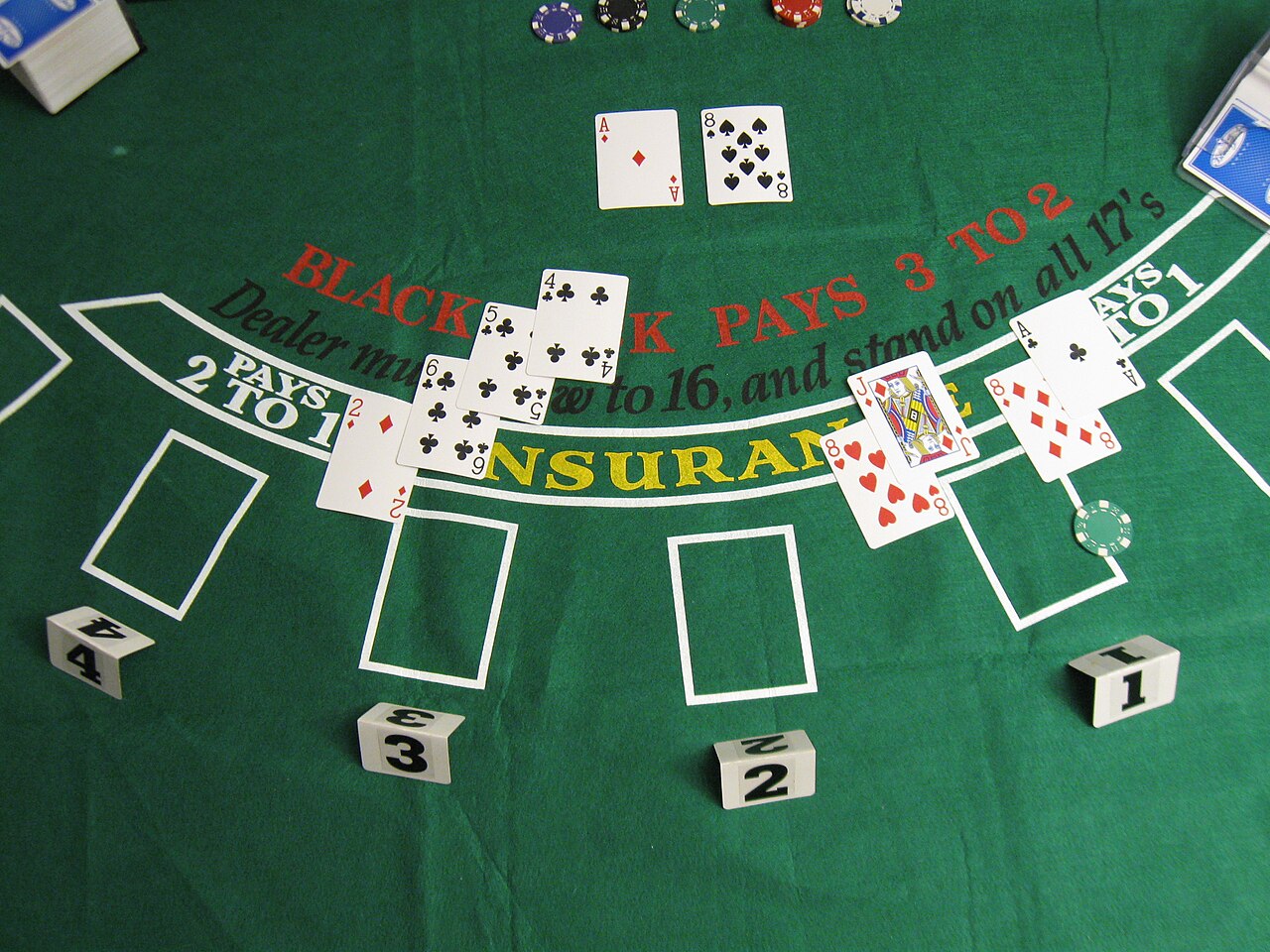
- Blackjack. You place one bet on your own hand, then decide what to do with it as the round develops. Whether to take another card, stand, or use the table’s other options is your call. The vocabulary of those decisions is substantial, which is why we keep a glossary of blackjack terms for the phrases you will hear.
In short: baccarat asks one question before the deal; blackjack keeps asking until your hand is complete.
House Edge and Payouts Side by Side
Winning bets on the player and banker sides in baccarat are paid at even money, but winning banker bets carry a 5% commission, which the dealer tracks through the shoe. The odds favour the bank, with a house edge of at least one percent, as our house edge article explains in more detail. In blackjack, the edge depends on the exact table rules and the choices players make, so check the rules where you play rather than assuming any figure. What both games share is that no betting pattern removes the house’s advantage.
| Feature | Baccarat | Blackjack |
|---|---|---|
| The aim | Bet on the hand finishing closest to nine | Play your own hand against the dealer’s |
| Card values | Tens count zero, aces count one, last digit of totals above nine is dropped | Set by the table’s own rules; check before you play |
| Decisions after betting | None in punto banco; fixed drawing rules | You choose on every hand |
| Side bets | Pairs (12 for 1) and tie (9 for 1) at many tables | Varies by table; check the rules displayed |
| Might suit | Players who want one decision per round and fixed drawing rules | Players who want to manage their own hand |
Warning
The tie bet pays the most, which is why it is promoted on the layout. Bigger payouts always mean a lower chance of winning.
Speed of Play and Table Etiquette
Baccarat rounds move quickly because there is nothing to decide once bets are down. The dealer deals, announces totals, calls for third cards and pays out. At a mini-baccarat table, only the croupier is permitted to deal the cards, so the game runs at a steady, uniform pace. Blackjack is slower by design: each player acts in turn, and the round cannot end until every hand is resolved. Etiquette mirrors this. In blackjack you signal your choices to the dealer so there is no confusion; in baccarat there is little to signal, since the hands play themselves out.
Which Game Suits Which Player
Baccarat suits players who want a round that starts and finishes with a single bet, and who accept that the drawing rules leave nothing to manage. Blackjack suits players who prefer to make a decision on every hand and are willing to learn the rules of the table they join. Neither is better in general, and neither offers a route to profit: both are games of chance priced in the house’s favour.
For readers going further, our odds and probability terms glossary explains the language of chance used in both games, and our guide to setting gambling limits looks at tools that help keep play within a budget chosen in advance. Whichever table you join, learn the rules and payouts first and set your limits before you sit down.
Questions answered
In baccarat, do the player and banker hands belong to the players and the house?
No. Neither hand represents you or the casino. You simply bet on which hand will finish closest to nine, and both hands play out according to fixed rules.
Why does a banker bet in baccarat cost a commission?
Because the banker hand has a slight statistical advantage, winning banker bets are commonly charged a 5% commission. The dealer keeps a running record of it during the shoe.
Which game gives you more control: baccarat or blackjack?
Blackjack, in the sense that you make a decision about your own hand after the cards are dealt. In punto banco baccarat, the drawing rules decide everything once your bet is down.
Is a tie bet in baccarat a good idea?
It pays 9 for 1 at many tables, but like every casino bet it is priced so the house retains an advantage. No bet removes that advantage.